General
The Business Impact of Unplanned Technology Obsolescence
Roy Bolt
June 6, 2026
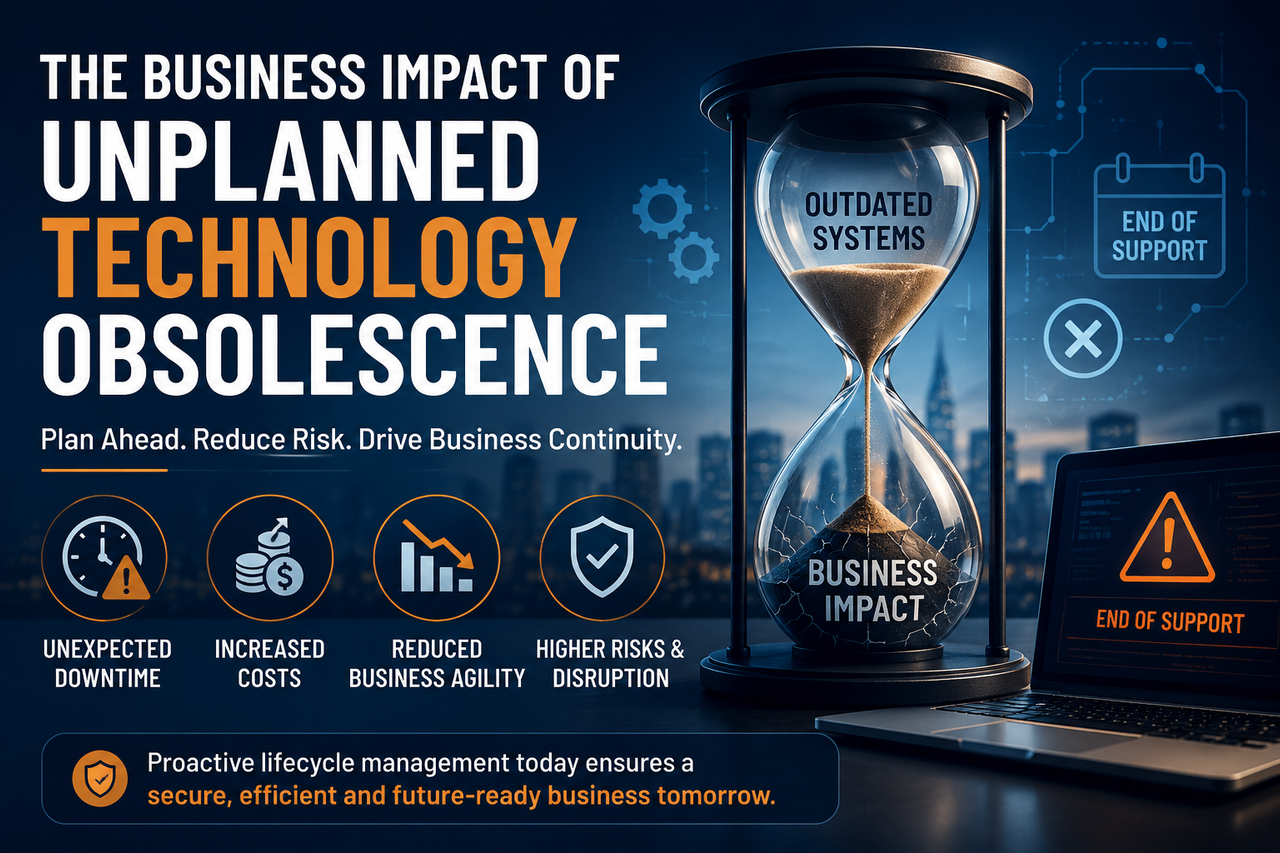
The Business Impact of Unplanned Technology Obsolescence
Technology obsolescence rarely happens overnight. However, when organizations fail to monitor aging hardware and software, the consequences can be significant.
Key Impacts of Unplanned Technology Obsolescence
Unplanned technology obsolescence often leads to:
- Unexpected downtime
- Increased operational costs
- Reduced business agility
Reactive Decision-Making Problems
Many businesses discover critical systems are nearing retirement only when a vendor announces the end of support. At that point:
- IT teams are forced into urgent decisions
- Migrations are rushed
- Implementation costs increase significantly
Importance of Proactive Lifecycle Strategy
A proactive lifecycle strategy helps organizations identify risks years in advance. By tracking assets approaching end-of-life, companies can:
- Allocate budgets more effectively
- Reduce unexpected disruptions
- Maintain stable business operations
Strategic Advantage
Organizations that treat technology lifecycle management as a strategic initiative are better positioned to:
- Reduce operational risk
- Improve long-term planning
- Support sustainable business growth